Elderly Injuries & Mobility: How Physiotherapy Helps Seniors Stay Active
Published:
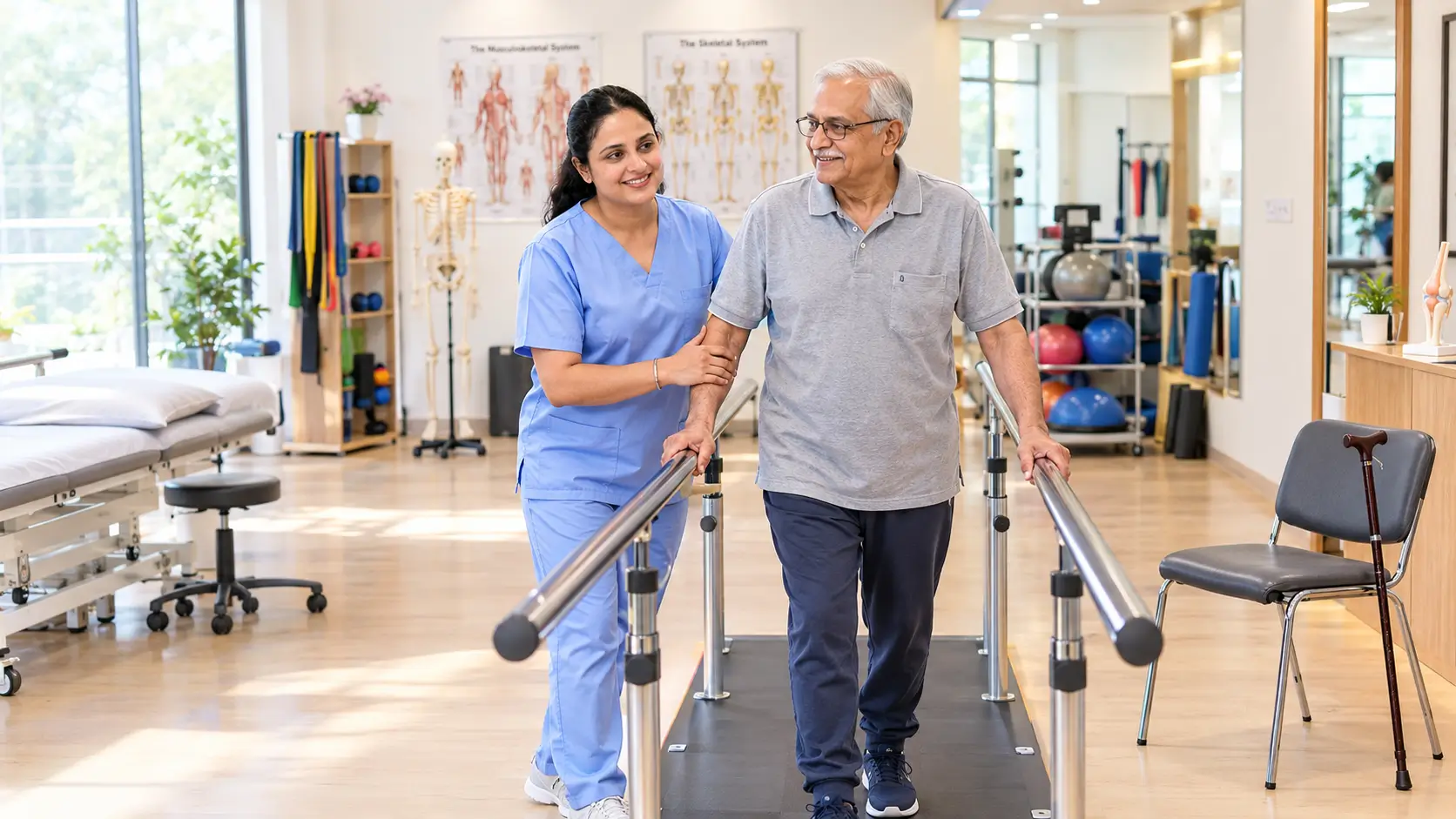
Discover how physiotherapy helps seniors recover from injuries, prevent falls, and stay independent and mobile.
As we age, even a small slip or awkward movement can lead to an injury that takes much longer to heal. Falls, fractures, joint pain, and muscle weakness are among the most common problems affecting older adults, and they often cause a loss of confidence that makes people move less. This reduced activity then weakens the body further, creating a cycle that quietly takes away independence.
Several age-related changes increase the risk of injury. Muscle mass and strength decline, bones become thinner in conditions like osteoporosis, joints stiffen with arthritis, and balance and reaction time slow down. Poor eyesight, certain medications, and long periods of sitting add to the risk. The most common elderly injuries include hip and wrist fractures, knee and back pain, shoulder problems, and sprains from falls.
Many families assume that rest and caution are the safest approach after an injury. In reality, too much rest leads to stiffness, weakness, and a higher chance of another fall. Physiotherapy for the elderly focuses on safe, guided movement that rebuilds strength, improves balance, and restores confidence, which is far more protective than avoiding activity altogether.
At Movement with Physios, we design gentle, personalised programmes that respect each person's health conditions, pace, and goals. Whether you are recovering from a fall, managing joint pain, or simply want to stay steady on your feet, our aim is to help you move comfortably and keep living independently.
How Physiotherapy Improves Mobility and Prevents Injuries in Older Adults
Care begins with a gentle, thorough assessment of strength, joint movement, balance, walking pattern, and pain, along with a review of your medical history, medications, and any advice from your doctor.
After an injury or fracture, treatment focuses on safe pain relief and early, guided movement within the limits set by your doctor or surgeon, so stiffness and muscle loss are kept to a minimum.
Balance and strength training is the heart of fall prevention. Simple exercises for the legs, hips, and core, along with balance and walking practice, help the body react better and stay steady on uneven ground.
Hands-on therapy and gentle mobility exercises ease stiff, painful joints, and gait training with a walking stick or walker, when needed, makes every step safer and more confident.
Practical advice on home safety, footwear, and everyday movement, together with a simple home exercise plan, helps you maintain your progress long after your sessions end.
- Balance and fall-prevention training to improve stability and confidence
- Strength exercises for the legs, hips, and core to support daily activities
- Joint mobility work and manual therapy to ease stiffness and arthritis pain
- Rehabilitation after fractures, falls, and joint or hip surgery
- Gait training and walking aid guidance for safer movement
- Home safety advice and a simple, safe home exercise programme
Ageing does not have to mean losing your independence. With the right physiotherapy, older adults can recover from injuries, move with less pain, and feel steady and confident again. At Movement with Physios, we help seniors stay active, safe, and independent, so every day at home feels a little easier.