Save 20% on your first session!

Fitness Mistakes That Lead to Chronic Pain
Learn about the fitness mistakes that can result in chronic pain. Empower yourself with knowledge to create a safer and more effective workout plan.
Movement With Physios
5/20/20267 min read
Most people start a fitness routine with the best intentions. You want to feel stronger, move better, lose weight, or simply stay healthy. But here is something that does not get talked about enough: the gym, the running track, or even your living room yoga mat can become a source of long-term pain if you are not approaching exercise the right way.
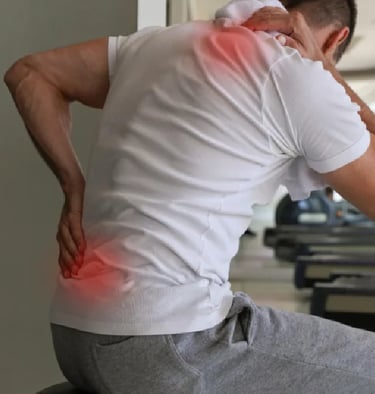
Chronic pain from fitness mistakes is far more common than you might think. Many people push through discomfort, skip the basics, or follow generic programs that are simply not designed for their bodies. Over time, these choices stack up and turn into persistent aches, joint problems, nerve issues, and movement dysfunction that can affect everyday life.
At Movement With Physios, we work with clients every day who are dealing with chronic pain that started with well-meaning fitness habits that went wrong. Some of these clients require specialist support, including neuro-rehabilitation, because the impact on their nervous system and movement control has become significant.
This article walks you through the most common fitness mistakes that lead to chronic pain, so you can train smarter, move better, and protect your body for the long haul.
Skipping the Warm-Up and Cool-Down Is a Fast Track to Injury
This is probably the most widespread mistake in fitness. People skip the warm-up because they are short on time, and skip the cool-down because they are tired. Both decisions come at a cost.
A proper warm-up gradually increases your heart rate, prepares your joints for movement, and activates the muscles you are about to use. Without it, you are essentially asking cold, stiff tissues to perform at full capacity. That is a recipe for muscle strains, tendon irritation, and joint stress.
The cool-down is equally important. After intense exercise, your muscles are full of metabolic waste products and are in a shortened, contracted state. A structured cool-down helps your body transition back to rest, reduces post-exercise inflammation, and begins the recovery process. Skipping it regularly contributes to muscle tightness that builds over weeks and months into chronic pain patterns.
What to do instead: Give yourself at least 8 to 10 minutes for a dynamic warm-up before your session and 5 to 10 minutes of gentle stretching and breathing at the end. It is not wasted time. It is essential training time.
Training Through Pain Instead of Training Around It
One of the most damaging mindsets in fitness culture is "no pain, no gain." There is a clear difference between the discomfort of effort (burning muscles during a hard set) and the warning signals of actual tissue stress or injury (sharp pain, joint aching, localised soreness that does not go away).
When you consistently train through pain signals, you are overriding your body's protective mechanisms. Short-term, this might feel like toughness. Long-term, it leads to tissue damage, compensation patterns, and chronic pain that can be difficult to reverse.
Compensation patterns are particularly problematic. When one area of the body is in pain, other muscles and joints quietly take on more load than they should. Over time, those compensating areas wear down too, creating a cascade of pain and dysfunction.
This is one reason why some clients at Movement With Physios need neuro rehabilitation support. Persistent pain changes the way the nervous system processes movement signals, and that rewiring can make pain feel more intense and widespread, even after the original injury has healed.
What to do instead: Learn to distinguish effort discomfort from injury signals. If something hurts in a sharp, localised, or persistent way, stop the exercise. See a physiotherapist before you return to that movement pattern.
Poor Movement Technique Builds Chronic Pain One Rep at a Time
Every repetition of a poorly performed movement adds a tiny amount of stress to the wrong tissues. Do that movement hundreds or thousands of times across months of training, and you are setting yourself up for overuse injuries and chronic pain.
Poor squat form, loading the knees rather than the hips. Bench pressing with a collapsed chest and protracted shoulders. Running with an overstriding gait that hammers the knee and hip joints on every step. These are not rare mistakes. They are extremely common, and most people are not even aware that they are doing them.
The problem is that bad technique often does not cause immediate pain. The damage builds slowly and silently until the tissue can no longer cope. At that point, people often blame a single session or a single movement, when in reality the issue has been developing for a long time.
What to do instead: Invest in learning correct technique from a qualified professional before adding load or volume. A few sessions with a physiotherapist or accredited trainer who understands movement quality can save you years of chronic pain down the track.
Overtraining and ignoring recovery are one of the Biggest Fitness Mistakes That Lead to Chronic Pain
The fitness industry sells the idea that more is better. More sessions, more intensity, more volume. But your body does not get stronger during training. It gets stronger during recovery. Training is the stimulus. Recovery is where the adaptation happens.
When you train more than your body can recover from, you push it into a state of chronic stress. This shows up as persistent muscle soreness, fatigue, declining performance, disrupted sleep, increased injury risk, and, over time, chronic pain in the joints, tendons, and soft tissues that never seem to get a proper chance to heal.
Tendons are particularly vulnerable. They have a relatively poor blood supply compared to muscle, which means they recover more slowly. Repeated overloading without adequate recovery leads to tendinopathy, a degenerative change in the tendon structure that causes ongoing pain and weakness.
The nervous system is also affected by overtraining. When your body is under constant physical stress, your nervous system stays in a heightened state of alert. This makes pain signals louder and recovery harder. In some cases, the nervous system sensitisation becomes significant enough that neuro rehabilitation becomes part of the management plan.
What to do instead: Build rest days into your training schedule as non-negotiables, not optional extras. Aim for 7 to 9 hours of sleep per night. Vary your training intensity across the week. Listen to your body's recovery signals.
Neglecting Mobility and Flexibility Work Leads to Joint Problems
Strength and cardiovascular fitness get all the attention, but mobility and flexibility are just as critical for long-term pain-free movement. When your joints lack the range of motion required for a movement, your body finds a way to get that range from somewhere else. That "somewhere else" is usually a joint or tissue that was not designed to carry that load.
Tight hip flexors from sitting too much and not addressing it with regular mobility work force the lumbar spine to compensate. Over time, that repeated lumbar compensation leads to lower back pain. Restricted thoracic mobility leads to neck and shoulder dysfunction. Limited ankle dorsiflexion leads to knee tracking problems and Achilles tendon stress.
These are not hypothetical chains of events. They are patterns that physiotherapists see every single day at clinics like Movement With Physios.
Mobility limitations also affect the way your nervous system coordinates movement. When joints do not move freely through their intended range, the movement signals between your body and your brain become less accurate. This can contribute to coordination problems and pain sensitisation that may, in more complex cases, benefit from a structured neurorehabilitation approach.
What to do instead: Dedicate specific time to mobility and flexibility training, particularly in areas that are known to tighten with your lifestyle and training type. Hip flexors, thoracic spine, shoulders, and ankles are high priorities for most people.
Following Generic Programs That Do Not Suit Your Body
The internet is full of generic fitness programs. 12-week challenges, one-size-fits-all workout plans, and influencer routines that look great on screen but have no understanding of the person doing them.
Everybody is different. You may have a history of injury, structural variations in your joints, movement asymmetries, or an underlying health condition that makes a standard program either ineffective or actively harmful. Following a program designed for someone with completely different needs is one of the subtler fitness mistakes that lead to chronic pain, precisely because it is hard to pinpoint as a cause.
Generic programs also tend to ignore individual recovery capacity. A 5-day per week program might be appropriate for a 25-year-old athlete with years of training experience and no injury history. That same program could be devastating for someone returning to exercise after a long break, managing a chronic health condition, or working a physically demanding job.
What to do instead: Work with a qualified physiotherapist or exercise specialist who can assess your movement patterns, understand your history, and build or recommend a program that is designed for your specific needs and goals. This is not an indulgence. It is an investment in your long-term health.
Ignoring the Role of the Nervous System in Fitness-Related Chronic Pain
This is a dimension of fitness-related pain that most people never consider. Your nervous system is not just a passive observer of your training. It actively regulates how your muscles coordinate, how much load your joints can handle, and how your body interprets pain signals.
When you repeatedly expose your body to poor movement patterns, excessive load, or inadequate recovery, the nervous system adapts in ways that can make you more vulnerable to pain. Nerve pathways associated with pain can become sensitised, meaning they fire more easily and with greater intensity. This is why some people experience pain that seems disproportionate to the physical findings on a scan or examination.
In these situations, addressing the musculoskeletal component alone is not enough. The nervous system needs to be part of the rehabilitation process. This is exactly where neuro rehabilitation plays a vital role, helping to retrain the way the nervous system processes movement and pain, and rebuilding the foundations of confident, pain-free movement.
At Movement With Physios, our neuro physiotherapy approach addresses this mind-body movement connection directly. You can learn more about our neuro physiotherapy services at movementwithphysios.com/neuro-physiotherapy.
Conclusion
Fitness should add quality to your life, not take it away. But when common fitness mistakes go unaddressed, they accumulate into chronic pain that affects not just your training but your work, your sleep, and your ability to do the things you love.
The good news is that most of these mistakes are entirely avoidable with the right guidance. Understanding how your body moves, respecting its need for recovery, addressing mobility limitations, and training with proper technique all make a significant difference. And when the nervous system has been caught up in the pain cycle, skilled support, including neurorehabilitation, can be a genuine turning point.
If you are currently dealing with chronic pain that started with or has been made worse by your fitness routine, do not keep pushing through it and hoping it gets better on its own. Book an assessment with the team at Movement With Physios. We take the time to understand your body, your history, and your goals, and we build a plan that actually fits you.
Ready to move without pain? Visit movement with physios to book your assessment today, or explore our specialist neuro physiotherapy services if you are dealing with complex or persistent pain patterns.
Movement With Physios | Expert Physiotherapy for Real People

Contact:
1st floor, Noida Indoor Stadium,
Sector 21A, Noida,
Uttar Pradesh 201307
Phone:
info@movementwithphysios.com
© 2026 Movement With Physios. All rights reserved.
Email:
Movement With Physios offer professional physiotherapy services guided by clinical expertise, modern rehabilitation techniques, and a patient-centered approach; ensuring safe, effective, and reliable care at every stage of recovery.